- IVAN HUG
- Posts
- Your first salary number becomes the cage for every number that follows
Your first salary number becomes the cage for every number that follows

Ivan Hug
November 17, 2025
You've already lost between $500,000 and $1,000,000 in lifetime earnings. The brutal part? You don't even know it happened.

Most professionals believe they're decent negotiators. The data reveals a different story. Research from Harvard shows that professionals who don't negotiate their initial job offers lose up to $1 million in lifetime earnings. But the real cost extends far beyond money—you're surrendering autonomy, purpose, and the career architecture you actually want.
This isn't another generic negotiation guide. This is the conversation about the conversation that changes everything. Few minutes read or view here.
The acceptance trap that destroys careers
Picture this: The offer arrives. Your heart races. The number looks... decent. Then fear whispers its familiar refrain: "What if they pull it? What if they think I'm difficult? What if someone else accepts while I'm negotiating?"

So you accept. Fast forward three years. You've crushed every goal they set. You've exceeded expectations quarterly. You've become indispensable. But that low starting salary still anchors everything—every raise, every promotion, every subsequent offer compounds from that original mistake.
The gap doesn't just persist. It multiplies. A $6,000 difference in starting salary becomes $900,000 over a 40-year career with identical raises and promotions. Same performance. Same trajectory. Massively different outcomes. And that calculation assumes equal advancement—but negotiation signals leadership capability, so the person who negotiated likely received faster promotions and better opportunities too.
Here's what nobody tells you: 70% of hiring managers expect you to negotiate. They're not just waiting to see if you'll ask for more money. They're evaluating whether you possess the strategic thinking, effective advocacy, and leadership potential their organization needs.
Your negotiation isn't just about compensation. It's your first leadership audition.
The negotiation mistake extends beyond salary to career architecture itself. Remote workers get promoted at 3.9% rates compared to 5.6% for in-office peers—a 30% promotion penalty for flexibility. You're not less productive when working remotely. You're less visible.

This visibility gap means negotiating isn't just about securing remote work permission. It's about establishing the visibility architecture that makes location irrelevant to advancement. Without this conversation, you accept a penalty that compounds throughout your career.
Research on Microsoft and Intel employees reveals something fascinating. When these professionals negotiated, they didn't just ask for bigger paychecks. They crafted entire employment ecosystems—flexible schedules, passion-aligned roles, development budgets, project selection autonomy. The result? 30% higher engagement and retention rates that made executives reconsider everything they thought they knew about employment relationships.
These professionals understood what most miss: The negotiation determines not just your compensation but the entire structure of your professional life.
What you're actually negotiating for
Stop optimizing for salary alone. The most successful negotiations focus on three dimensions most professionals ignore:
Purpose alignment - What work makes you feel alive rather than drained? When Google employees negotiated for value-matching roles aligned with personal interests, satisfaction and retention rates doubled. Not improved—doubled. They stopped accepting generic roles and started designing positions that energized them.
Autonomy architecture - What decision-making authority do you need for your best work? The ability to choose projects, select team members, determine working hours, and shape your role creates engagement that salary alone never achieves.
Impact potential - What difference do you want to make? Professionals who negotiate for roles with measurable impact report significantly higher job satisfaction than those who optimize purely for compensation.
Harvard research on negotiation outcomes reveals something counterintuitive: Professionals who focus exclusively on salary often earn less over time than those who negotiate for purpose, autonomy, and impact alongside compensation. Why? Because engagement drives performance, performance drives advancement, and advancement drives compensation growth.
The million-dollar conversation isn't about extracting maximum dollars from your next offer. It's about architecting a career that compounds value across every dimension that matters.
The generous shark strategy
The best negotiators operate with a principle that sounds contradictory: strategic generosity. They're simultaneously more giving and more protective than average negotiators. How does this work?

They identify what they care less about and trade it for what their counterpart values more. Research shows 45% of workers using generosity strategies report better outcomes than those playing hardball. The difference? They build trust while protecting their core interests.
Consider this scenario: You care deeply about remote work flexibility but less about start date. Your employer desperately needs someone to begin immediately but has standard remote work policies. The generous shark trades an earlier start date for remote work flexibility—giving the employer what they desperately need while securing what matters most to you.
This approach transforms negotiation from adversarial extraction to collaborative problem-solving. You're not taking from a fixed pie. You're creating value through strategic trade-offs that benefit both parties.
Companies like AES built entire negotiation strategies around transparency and mutual benefit. The result? Higher morale, fewer disputes, and productivity that crushed industry standards. 85% of ethical negotiators win their desired outcomes—not through manipulation but through principled clarity about what matters.
The confidence-ethics intersection
High confidence without ethics creates disasters and destroyed reputations. Think of every corporate scandal where aggressive negotiators secured short-term wins that imploded spectacularly. Ethics without confidence means everyone loses value—neither party achieves optimal outcomes because hesitation prevents honest advocacy.

The magic happens at the intersection. When you combine unwavering confidence in your value with ethical commitment to mutual benefit, negotiation transforms from zero-sum game to value creation. You advocate effectively for your needs while respecting your counterpart's constraints. You push for what matters without sacrificing integrity.
This balance matters more than most professionals realize. Your reputation follows you throughout your career. The hiring manager you negotiate with today becomes the executive who recommends you for opportunities tomorrow. The recruiter you treat respectfully during this negotiation remembers when perfect opportunities arise next year.
Short-term extraction destroys long-term opportunity. Ethical confidence builds compounding career capital.
The 72-hour preparation protocol
Most negotiation advice focuses on tactics during the conversation. But the conversation outcome gets determined in the 72 hours before you ever speak. Here's the preparation protocol that changes outcomes:
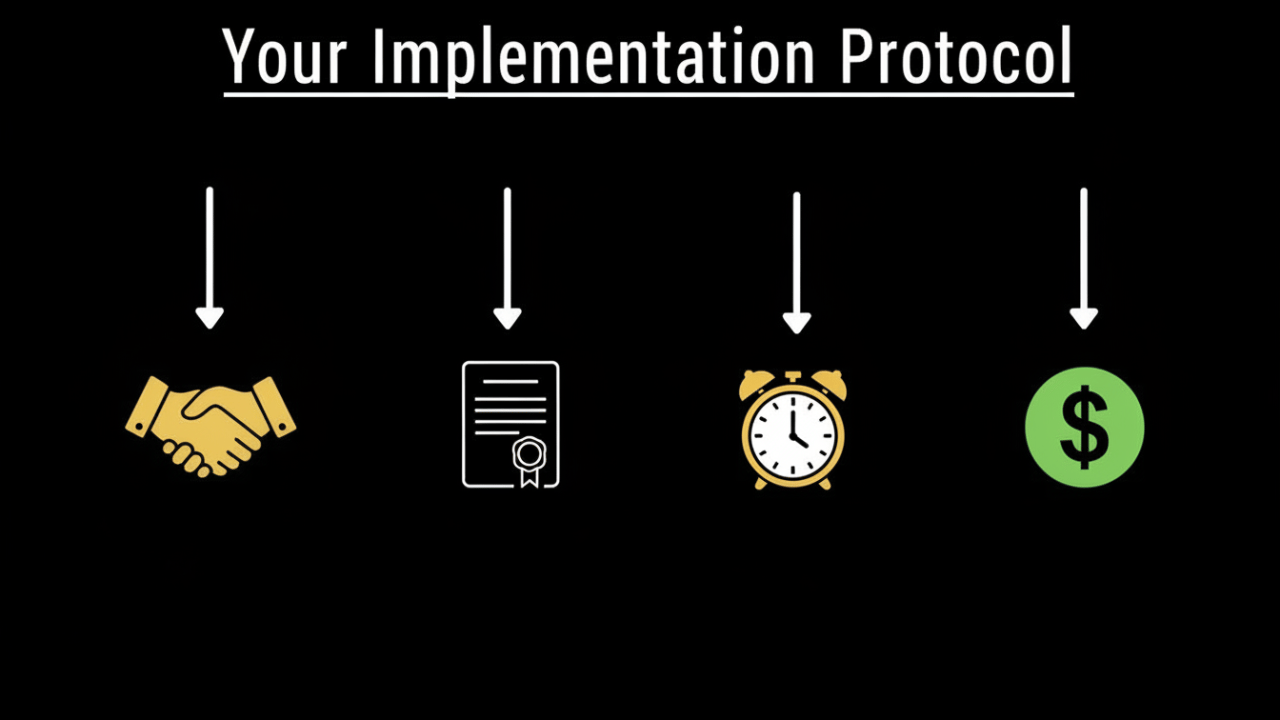
Value mapping - List 10 things that matter to you. Identify 5 must-haves (non-negotiables that determine whether you accept) and 5 nice-to-haves (valuable but not essential). This clarity prevents reactive decision-making during the actual conversation.
Market intelligence - Research specific salary ranges using Glassdoor, Levels.fyi, Payscale, and industry reports. Vague ranges don't help. You need precise numbers: "The market rate for this role with my experience in this geography is $85,000-$95,000 based on 47 recent data points from similar companies."
Strategic concessions - Identify 3 high-value, low-cost items you can offer. These are things that cost you little but your counterpart values significantly. Earlier start dates, willingness to travel occasionally, mentoring junior team members—find leverage points that create goodwill while protecting what matters most.
During the actual conversation, implementation becomes simple because preparation did the heavy lifting. You open with genuine appreciation ("I'm excited about this opportunity"), state your needs clearly ("I'm looking for a total package that includes..."), and invite collaboration without apologizing ("How can we structure this to work for both of us?").
The lesson you're teaching
Here's the uncomfortable truth most professionals avoid: Every negotiation teaches someone how to treat you. Not just this employer. Everyone watching how you advocate for yourself.

When you accept the first offer without discussion, you signal that your stated value is negotiable—that expressing needs risks relationships, that asserting worth creates problems. This lesson compounds across every subsequent interaction in that organization and beyond.
When you negotiate clearly and confidently, you establish different expectations. You signal that you know your worth, that collaboration beats accommodation, that clarity trumps conflict avoidance. These patterns shape not just your compensation but how colleagues, managers, and executives interact with you for years.
Your next negotiation isn't just about this offer. It's about the treatment you're accepting for the rest of your career.
The architecture question
Six months from now, you'll look back on this moment. Will you remember it as when you started deliberately designing your career—negotiating for alignment between values and work? Or when you decided to keep accepting whatever's offered and hoping it works out?

The million-dollar conversation is waiting. The preparation takes 72 hours. The discussion takes 30 minutes. The impact lasts 40 years.
Are you building your career deliberately, or are you drifting through opportunities hoping things work out? The professionals who answer this question honestly and act accordingly don't just earn more money. They build careers that actually feel worth living.
Your next move: Identify what truly matters beyond salary. Research your market value with real numbers. Practice the generous shark approach on a low-stakes negotiation this week.
The question that changes everything isn't "Can I negotiate?" It's "Which would I choose: 20% more salary or 20% more autonomy?" Your answer reveals your negotiation framework—and the career you're actually building.
What matters most to you in your next role: compensation, autonomy, or purpose? Reply and let me know—I read every response.

