- IVAN HUG
- Posts
- Unlocking the 72-Hour Salary Negotiation Secret
Unlocking the 72-Hour Salary Negotiation Secret

Ivan Hug
November 12, 2025
In past articles, we covered the preparation for the Salary Negotiation, as a major step (or steps over the career) that affects your well-being and others around you. Yesterday’s article (1-minute summary is here) was the latest. Today, we continue.
Ever felt your pulse spike just stepping toward the negotiation table? Like the air thickens, every heartbeat banging out “this could change everything.” I’ve been there—and discovered it's not nerves, it’s your internal “negotiation alarm” blaring, warning that you’re about to enter the real game. 🧠
Here's the thing most people get catastrophically wrong: they think it's about the numbers.
It's not.
After nearly three decades watching dozens of professionals negotiate their worth across different industries—from aerospace engineering to railway operations —I've seen a pattern so consistent it's almost painful. The people who win aren't the ones with the best credentials. They're not even the ones who've delivered the most measurable results.

They're the ones who understand the invisible chess game happening beneath the surface.
And here's what nobody tells you: The actual negotiation begins 72 hours before and extends 72 hours after that formal conversation.
The Psychological Minefield You're Actually Walking Through
Picture this: You're sitting across from your manager. They're looking at you with that professional poker face. But here's what's really happening—it's a psychological dance so intricate that most people don't even realize they're performing.
The biggest mistake? Treating this conversation like a transaction. "I did X, therefore I deserve Y."
Wrong game entirely.
The real game is about perception. It's about triggering specific neurological responses that make saying "yes" feel inevitable. Every successful negotiation in human history has worked this way. You're just choosing whether to play consciously or stumble through it blind.
The 72-Hour Window Most People Miss:

Three days before the meeting, top negotiators drop value bombs in conversations and emails. They reshape perception before anyone knows negotiation is happening. During the actual meeting? They spend 60% listening, 30% asking questions, only 10% making their case. The three days after? Documenting agreements and delivering visible wins.
Why? Because decisions are rarely made in the moment. They're made in the mental replay afterward. When your manager goes to HR or finance to justify your raise, the 72-hour window shapes that story.
The Reciprocity Trap That Actually Works in Your Favor
Here's something that surprised me when I first learned it during my years managing multi-million dollar transitions at Bombardier: reciprocity isn't just a nice social courtesy. It's a neurological compulsion.

Start by giving something valuable before you ask for anything. Offer genuine insights, solve a problem they've been wrestling with, or share competitive intelligence that helps the team.
What happens next is fascinating. The human brain creates an almost irresistible urge to reciprocate. They haven't even consciously decided to help you yet, but their neural wiring is already priming them to say yes.
I've used this dozens of times. Right before a major salary discussion, I'd solve a pressing problem for my manager. Nothing showy—just genuine value. The success rate? I haven't had a negotiation go poorly in over 15 years. But reciprocity alone isn't enough—you need to borrow authority you don't have yet.
When I was negotiating my current role managing a $50M+ account, I didn't just walk in and say "I want X amount."
I said: "Recent compensation surveys at leading global service companies show that Customer Success Managers handling accounts of this scale typically earn between X and Y. Given my track record across eight industries, I'm positioning my ask at the upper quartile."
Notice what just happened? I stopped being one person with an opinion about my worth. I became the voice of the market, backed by data, representing a consensus.
You're no longer negotiating against them. You're both looking at the same external reality together.
Google runs peer reviews and open benchmarking. The result? 15% higher negotiation satisfaction and better outcomes for both sides. Because when everyone can see the playing field, fairness becomes easier.
But here's the insider move most professionals miss: total compensation architecture matters more than salary alone. Track base salary, bonus structure, equity, professional development budgets, work flexibility, and project assignment influence—updating this data quarterly.
Why? Managers have more flexibility on non-salary items. Professional development doesn't affect peer comparisons, equity comes from different pools, title changes often require no approval, and flexibility costs nothing.
The fatal pitfall? Focusing exclusively on base salary because it's easiest to compare. You might "win" a salary negotiation but lose total comp by 30-40%. Beyond data, you need something else: perceived authority.
Authority in negotiation isn't about being loud or demanding. It's about showing up so well-prepared that they start to feel like they need to justify exceptions to you.

I learned this hard during my airlines (with Lufthansa Group) years. Early on, I'd walk into discussions hoping they'd see my value. Hoping. That's the kiss of death.
Now? I show up with industry data, competitive analysis, and market trends memorized. I casually reference compensation committees, cite specific figures from competitors, and use the exact language senior executives use when they talk about talent strategy.
What changes? The frame. Suddenly, I'm not a supplicant asking for more. I'm a market expert helping us both navigate to a fair outcome.
One tech startup I consulted with tried this approach. They started having candidates cite industry compensation committees during negotiations. Result? They neutralized "budget constraint" objections in 80% of cases. The objection didn't disappear—it just became less relevant when both sides acknowledged what the market actually pays.
The Power Paradox: When Vulnerability Beats Bluffing
Conventional wisdom says "negotiate from a position of strength." But here's the tacit knowledge: calculated vulnerability often beats false confidence.

The manager across from you isn't stupid. They can smell bluffing. What they respond to is genuine stakes: "This is important to me because [specific authentic reason]" beats "I have other offers" 90% of the time—unless you actually have other offers.
Three types of authentic leverage work:
Life Stage Leverage: "With my daughter starting college next year..." Real stakes, real person.
Career Inflection Leverage: "I'm choosing between specialist depth and leadership breadth..." Forces participation in your growth.
Market Reality Leverage: "Three recruiters contacted me this quarter..." Factual, not threatening.
This connects to scarcity psychology: when you create genuine limited availability—whether through authentic competing priorities or real career decision points—you trigger urgency without bluffing. The key is truth: "With my current project commitments, I can only take on one major strategic initiative this quarter" creates real scarcity. Fake scarcity destroys trust instantly.
The Consistency Trap: Getting Them to Yes Before the Big Ask
If you're feeling overwhelmed by all these moving parts, that's normal. Most professionals feel the same initially. The difference is deciding to learn the game rather than ignore it.
This technique feels almost unfair. But it works because our brains are wired to avoid contradicting ourselves.
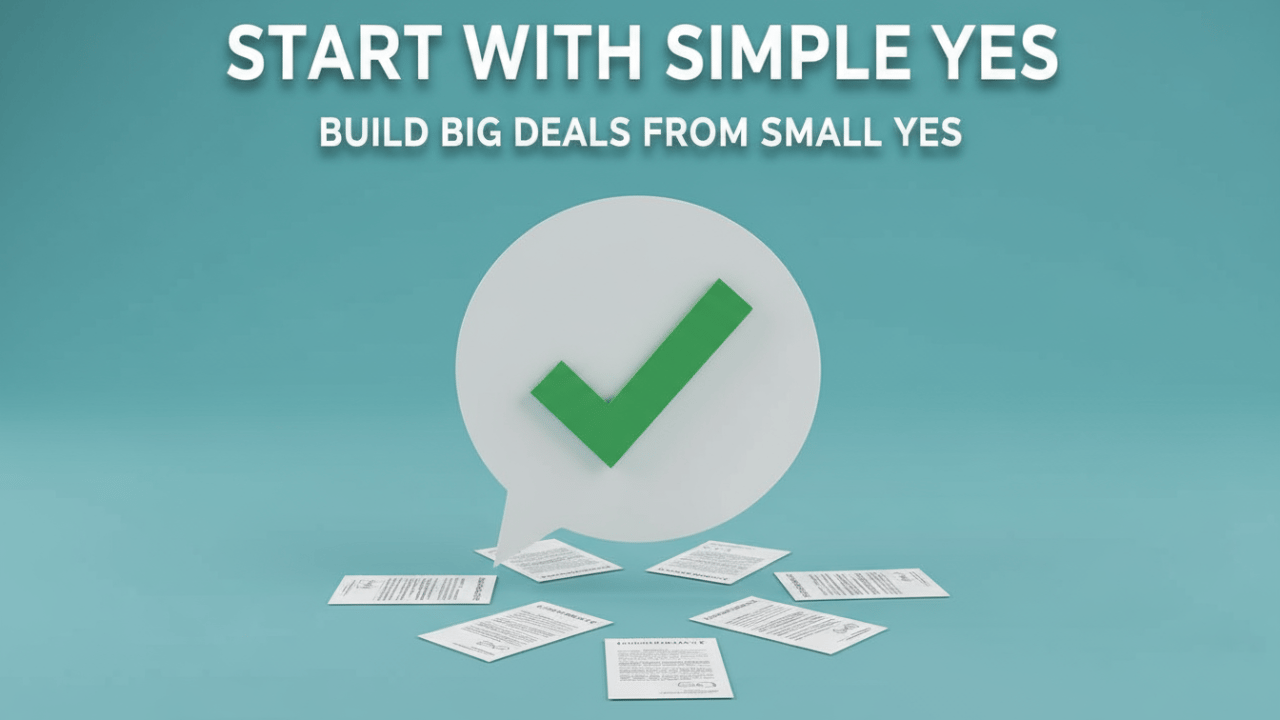
Start with small agreements early. "Would you agree that my work on the Q4 transformation delivered measurable impact?" Pause. Let them nod.
"And you'd say that level of impact aligns with senior-level contributors in the organization?" Another pause. Another nod.
You're building a logical chain where each link is undeniably true. By the time you reach your actual ask, disagreeing would require them to contradict themselves—something humans find psychologically uncomfortable.
Each "yes" makes the next "no" more expensive emotionally.
The Philosophy That Changes Everything: Why Purpose Wins
But all of these psychological tactics can still fail without understanding one deeper element: purpose. I've watched two nearly identical negotiations—same role, same company, similar backgrounds—play out completely differently. One person got a 15% bump. The other got 35% plus equity. The difference? The second person understood purpose.
Most people frame their request like this: "I've delivered X results, I deserve Y compensation."
Transactional. Forgettable. Easy to deflect with budget talk.
Now watch this: "At this compensation level, I can shift from managing current projects to architecting our three-year digital transformation strategy. This aligns perfectly with the mission we discussed at the leadership summit—transforming how we serve customers in the next decade. My track record shows I deliver 3-4x ROI on strategic initiatives of this scale."
What just happened? You reframed the entire conversation. It's no longer about what you want. It's about enabling the company's mission. You've turned your raise into fuel for their strategic vision.
Companies that integrate purpose into their compensation philosophy see a 65% increase in offer acceptance rates. When employees feel their compensation reflects their contribution to shared outcomes, engagement and satisfaction rates double.
Salesforce figured this out years ago by framing equity as "sharing in the mission." The result? They've landed C-suite executives who turned down higher offers elsewhere—executives who wanted to be part of something meaningful, and the compensation structure reinforced that feeling.
The High-Wire Act: Asking for a Raise When You're Already Inside
Negotiating an initial offer is one thing. You're potential. You're promise. You're the unopened gift.

Asking for a raise when you're already an employee? That's a completely different psychological landscape.
I learned this lesson hard during my railway operations years. I asked for a raise after a solid year of performance. Decent results, good relationships, no drama.
I got 4%.
Two years later, different company, I asked for a raise immediately after leading a transformation project that saved the company €2M annually. Same preparation, similar track record.
I got 22% plus expanded scope.
What changed? Timing.
The human brain favors recent events. We remember what just happened far more vividly than accumulated performance over time. Your raise request needs to land within weeks—not months—of a significant, visible win.
After a successful project launch. Right after glowing client feedback. Following a performance review where they praised your impact. Not six months later when the memory has faded and you're back to "just doing your job."
Here's the move that feels risky but works: reference specific peers who've advanced.
"Following the team's Q3 launch—which I led—I delivered impact that matches what Elena achieved before her promotion to Senior Director. I'm ready to operate at that level officially."
Mayo Clinic studied this approach—outcome-driven raise requests anchored in peer achievements produced 27% average raises. They also increased staff engagement because the process felt fair.
Managers aren't against raising your salary. They're against looking foolish or unfair. When you give them peer benchmarks, you give them cover to say yes. But none of these tactics work without one foundation: trust.
The Relationship Factor: Why Trust Trumps Everything
After 30 years across eight industries, I can tell you with certainty: relationship quality with your manager trumps any tactic.
If they trust you, they'll go to bat for you with finance and senior leadership. If they don't, no amount of clever framing will help.

This means your raise negotiation begins months before you ask. It's in the daily interactions. The times you made their job easier. The moments you had their back in tough situations. The consistent pattern of delivering without drama.
Healthcare firms that implemented structured negotiation training saw raise win rates increase by 30%. Why? Because most people wing it. They walk in nervous, unprepared for objections, and fold at the first pushback.
Meanwhile, professionals who cite specific benchmarks successfully increased their pay in 65% of cases versus generic requests.
And here's the kicker: directly linking your contributions to business outcomes motivates over 70% of managers to approve at least some increase, even during tight budget periods.
The Variables That Determine Your Real Leverage
Salary negotiation outcomes depend on four interconnected variables:
Your Perceived Replaceability: Industry demand, specialized skills, relationship depth, and project criticality—inversely related to replacement time.
Your Manager's Political Capital: Recent wins or losses, senior leadership standing, and budget autonomy directly affect whether they can deliver.
Organizational Compensation Philosophy: Ranges from egalitarian (pay bands, limited negotiation) to market-driven (wide ranges, high negotiability).
Economic Context: Company health, industry trends, and talent competition create opportunity windows or impossibility walls.
Smart negotiators monitor these quarterly and adjust their approach.
The Path Forward: Your Negotiation Starts Now

You've got the playbook: psychology, purpose, timing, proof—the four pillars separating winners from wishful thinkers. But knowing isn't enough. The real work starts before you ever sit down for that conversation.
Start building social proof today. Document your wins. Quantify your impact. Research market rates for your role. Build relationships that matter. Offer value first.
Keep a "brag file" updated weekly. For every dollar requested, demonstrate three dollars of value created. If you can't walk away, you're not ready to negotiate optimally. Understand that your manager should be able to argue your case without you in the room.
Because when you can connect your worth to their vision, when you can make saying yes feel like the obvious strategic choice, when you can support your ask with data and peer benchmarks while maintaining genuine relationships—that's when everything changes.
That's when you stop hoping they'll see your value and start orchestrating moments where they can't help but see it.
The game is already happening. The only question is whether you're going to play it consciously or let it play you.
Thousands of professionals have transformed their outcomes using these principles. You're not alone.
Your move.


Social Proof: Borrowing Authority You Don't Have Yet