- IVAN HUG
- Posts
- Fortune 500: 3 Modes (Balanced/Generalized/Matched) 3x Your Network 🎯
Fortune 500: 3 Modes (Balanced/Generalized/Matched) 3x Your Network 🎯
Ivan Hug
December 09, 2025
THE SPLIT-SECOND CALCULATION
Your finger hovers over "delete."
Another "pick your brain" request. Same pattern: never commented, never shared, never gave—now they want 30 minutes.
In 0.3 seconds, your brain fired its BS detector. That ancient neural pathway that once protected food and safety now guards your time, reputation, and opportunities.
Here's what most won't tell you: That hesitation isn't you being difficult. It's your brain detecting a fundamental mismatch in reciprocity mode.
And that mismatch is killing 90% of professional relationships before they start.
Couple of minutes video summary is here..
📊 THE TWO SYSTEMS RUNNING YOUR BRAIN
Every professional interaction runs on one of two reciprocity systems. Most people are stuck in the wrong one.
SYSTEM 1: BALANCED RECIPROCITY
Mental spreadsheet mode:
You help me = I owe you
Debt needs closing fast
Brain tracks who's "up" and "down"
Creates "networking dread"
SYSTEM 2: GENERALIZED RECIPROCITY
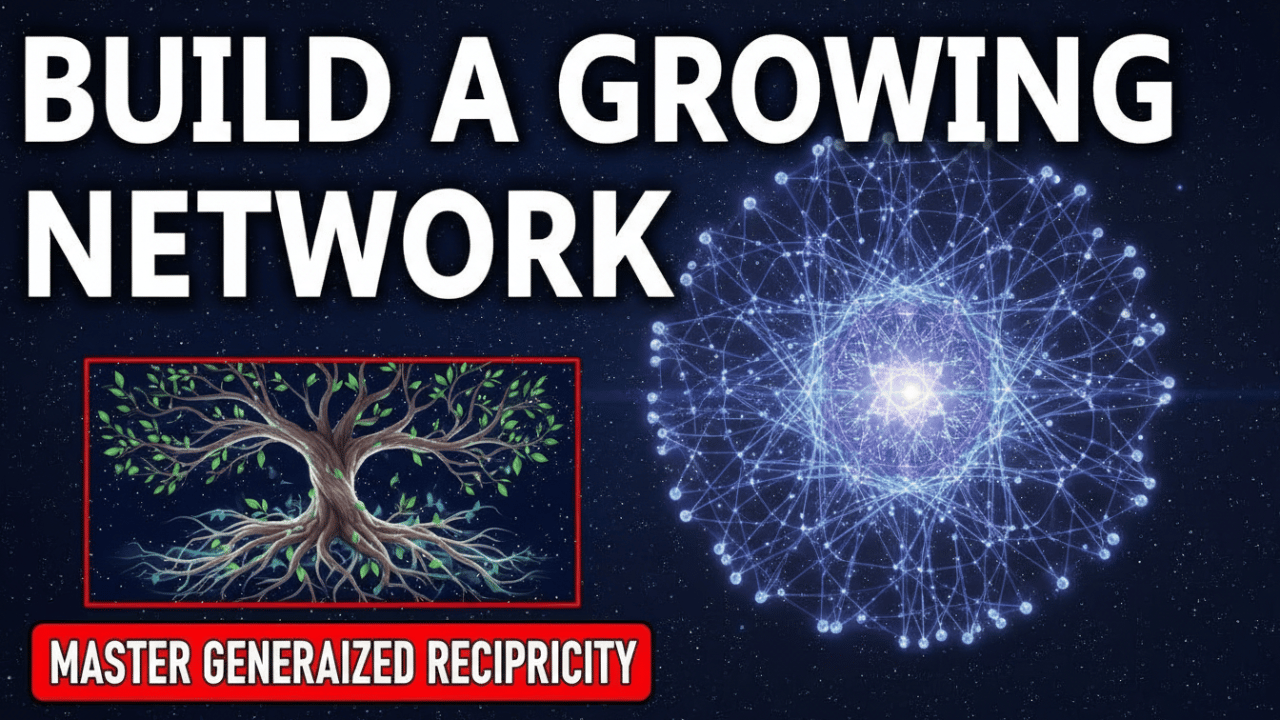
Ecosystem mode:
Contribute without scorekeeping
Others do the same
Value circulates, trust compounds
Feels natural, not transactional
Studies with thousands of professionals: Those in balanced mode report significantly higher stress and lower satisfaction.
The professionals whose careers compound? They've mastered generalized mode while everyone else runs mental spreadsheets.
💡 THE QUESTION THAT CHANGES EVERYTHING
WRONG QUESTION (I asked this for 10 years): "What can this person do for me?"
Sounds efficient. Actually guarantees you'll optimize for the wrong relationships.
RIGHT QUESTION (Game-changer): "Whose autonomy, mastery, or purpose is amplified by the capital I already hold?"
🧠 THE THREE INTRINSIC DRIVERS (according to Daniel Pink)
AUTONOMY-DRIVEN: Value relationships that protect or expand independence
MASTERY-DRIVEN: Seek relationships that stretch competence
PURPOSE-DRIVEN: Lean toward relationships creating meaningful impact
When your network aligns with these drivers, you experience dramatically higher satisfaction and faster momentum.
Your career capital = rare, hard-won skills you've built over time.
Map your strongest skills → Other people's intrinsic drivers = Networking becomes targeted value exchange, not favor-seeking.
📍 REAL EXAMPLE FROM MY 30+ YEARS
Last year, a colleague was stuck pivoting from operations to strategy.
Instead of asking "what's in it for me," I connected her rare logistics expertise with a growth-stage company's mastery need around supply chain optimization.
Result: From "risky career changer" to "obvious upgrade" in 8 months. Now leading cross-functional initiatives.
No transactional BS required.
🌍 THE CROSS-CULTURAL MISTAKE KILLING YOUR NETWORK
Across consumer goods, transportation, banking, and tech, I've watched talented people torch relationships over one invisible error:
Assuming their default trust pattern is universal.
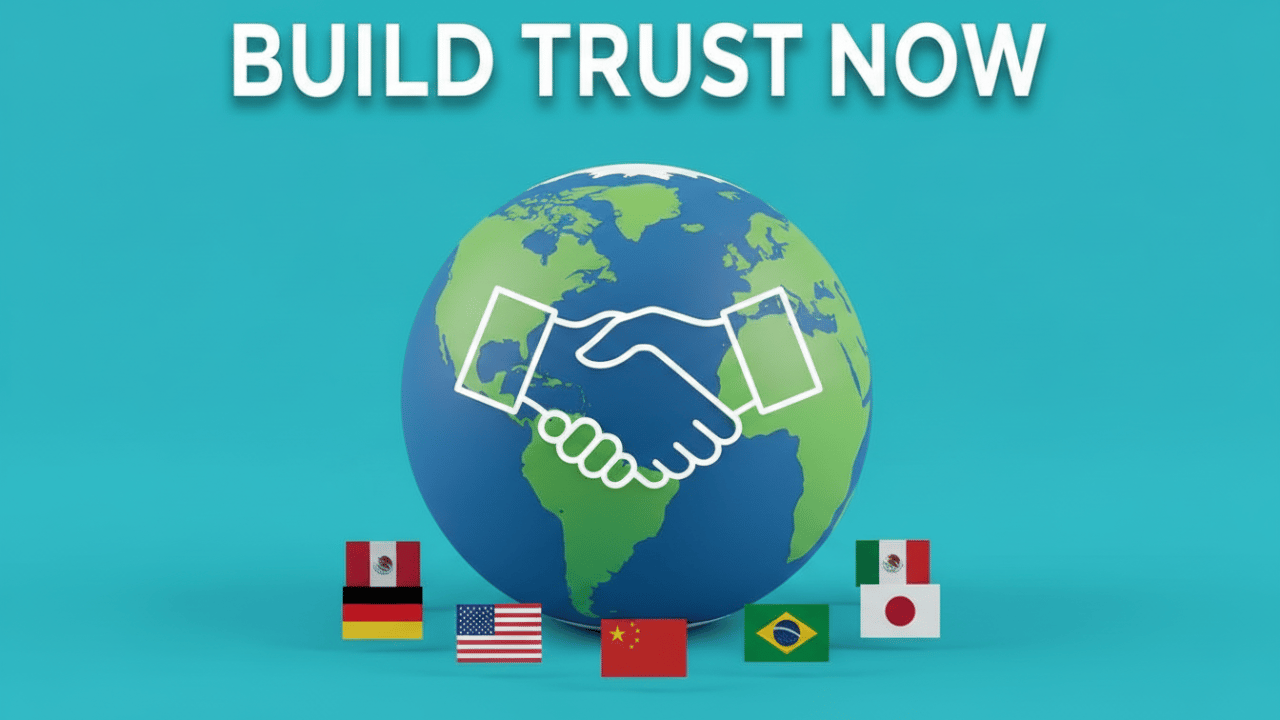
THE TRUST LANGUAGES
LOW-CONTEXT CULTURES (US, German business)
Trust through competence and clarity
Tight subject lines, clear asks, explicit next steps
HIGH-CONTEXT CULTURES (Latin America, Middle East, East Asia)
Trust through relationship and shared history
Open with connection, request comes second
REAL EXAMPLE: German engineering director expanding into Brazilian markets. His efficiency-driven emails—immediate asks, zero warm-up—tanked response rates.
Once he adjusted sequencing (relationship first, request second), everything shifted.
Same words. Different trust language.
⚡ REMOTE WORK CHANGED THE RULES
Trust that built in corridors now passes through Slack, Zoom, and email.
THE PRINCIPLE: Earlier and more fragile the relationship = higher bandwidth needed

DIGITAL TRUST CUES THAT MATTER:
Response times
Camera use
Reaction emojis
Message thoughtfulness
These substitute for eye contact and body language.
🎯 THE FOUR-CIRCLE SYSTEM THAT ACTUALLY SCALES
Stop trying to talk to everyone all the time. That guarantees overwhelm.

CIRCLE 1 (10-15 CORE ADVOCATES)
Quarterly deep conversations
Ongoing resource sharing
Immediate celebration of wins
Runs on generalized reciprocity
CIRCLE 2 (40-60 ACTIVE ALLIES)
Strategic introductions
Consistent content engagement
Periodic event presence
CIRCLE 3 (80-90 EXTENDED CONNECTIONS)
Handful of thoughtful updates yearly
CIRCLE 4 (BROADER WEAK TIES)
Tracked in simple CRM
Periodically reviewed for reactivation
Why this works: Your brain can only maintain ~150 stable relationships (Dunbar's number). Allocate deliberately.
📝 THE CONTENT STRATEGY
Instead of sharing random links, choose a small set of problems you want to be known for solving them.
Over time, stakeholders mentally tag you as "the person for X."
IN REMOTE SETUPS, SMALL GESTURES AMPLIFY:
✓ Short Loom walking through a solution
✓ Slack DM connecting two people across teams
✓ Tight LinkedIn note with perfectly chosen resource
These beat another calendar-stuffing coffee meeting.
🔄 HOW AN INTROVERT BUILT MASSIVE NETWORK WITHOUT NETWORKING
Patricia, an HR consultant with avoidant attachment style. Traditional networking exhausted her completely.
HER SHIFT: Weekly posts on organizational psychology.
RESULTS IN 18 MONTHS:
Most new business from referrals
From people who'd never met her for coffee
But had repeatedly seen, used, and shared her work
Why it worked: Content gave her anxious brain structure, allowed introverted energy management, built recognizable brand across multiple clients simultaneously.
🧬 THE ATTACHMENT-INFORMED STRATEGY NOBODY TEACHES
Traditional networking advice assumes everyone experiences relationships the same way.
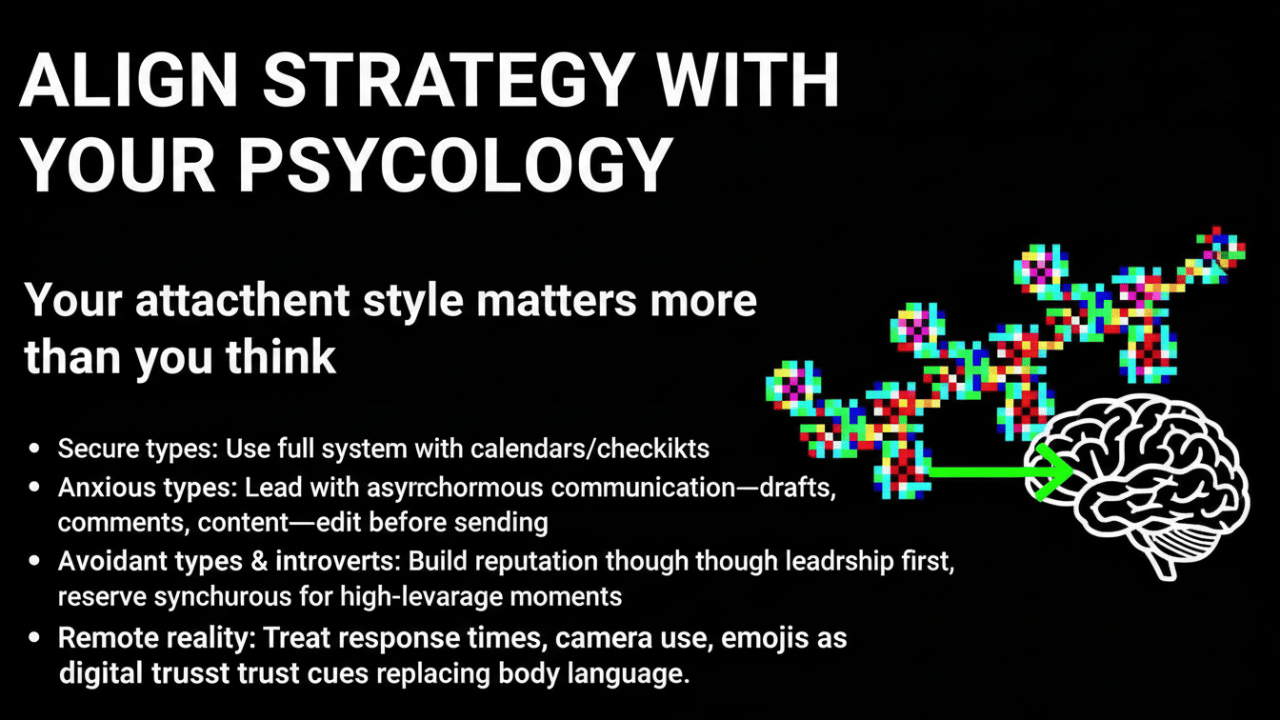
Attachment theory says otherwise:
SECURE ATTACHMENT → Comfortable with autonomy and connection → Use full system with calendars and checklists
ANXIOUS ATTACHMENT
→ Fear abandonment, over-interpret silence → Lean into asynchronous communication → Draft messages, thoughtful comments, content creation
AVOIDANT ATTACHMENT + INTROVERTS → Value independence, feel drained by demands → Build reputation through thought leadership → Written-first outreach, reserve live conversations for high-leverage moments
💪 INTROVERT-FRIENDLY TACTICS I USE
After managing stakeholders across Bombardier, Airbus, Boeing, airlines, and banking:
✓ Choose 1-2 platforms for consistent substance
✓ Schedule short 1:1 video coffees vs. large events
✓ Use email/DMs as default for starting relationships
✓ Live conversations only after trust is established
✓ Publish small, regular pieces around defined problem space
Your reputation travels across organizations even when contracts change.
🎯 YOUR NEXT THREE MOVES

THIS WEEK: Identify your top 10-15 core relationships. Send one person a no-ask message sharing something genuinely useful—a resource, an introduction, an insight. No expectation of return.
THIS MONTH: Choose one platform where you'll consistently contribute value around your career capital. Not promotional. Not humble-brags. Actual insight helping people solve real problems. Commit to 4-6 posts or thoughtful comments minimum.
THIS QUARTER: Audit your attachment style and energy profile. Secure, anxious, or avoidant? Introvert or extravert? Design your networking approach to work with those realities instead of fighting them.
💬 QUICK QUESTION FOR YOU
What's your biggest networking challenge right now?
Reply to this email—I read and respond to every single one. Your answer might shape next week's newsletter.
🚀 THE BOTTOM LINE
The professionals whose careers compound aren't more charismatic or more connected.
They simply stopped treating relationships like transactions and started building ecosystems that match how humans actually form trust.

Your BS detector isn't the problem.
It's been trying to tell you that balanced reciprocity is exhausting and generalized reciprocity is sustainable.
You just needed the language to understand what it was saying.
Now you have it.
Enjoying these insights?
The best way to support this work: Share it with one colleague who'd benefit.
Refer 3 friends → Get my Career Capital Assessment Framework
Refer 10 friends → Get exclusive monthly Q&A access
Refer 25 friends → Get 1:1 career strategy session
👤 ABOUT IVAN HUG
Career strategist with 30+ years across consumer goods (RJR Nabisco), transportation (Bombardier, Airbus, Boeing, Bell Helicopters), and technology.
Mechanical Engineering + Computer Science + Business Administration background. Stanford-certified in digital platforms. Scaled Agile professional.
Currently: Customer Success Manager for global outsourcing company, serving major global clients.
Mission: Providing "lighthouse" guidance to professionals navigating career structure, earning potential, work-life balance, and workplace success.
Weekly insights that actually move your career forward. No fluff. Just strategies successful people use but rarely share.

