- IVAN HUG
- Posts
- Emotions Are Tools, Not Weather
Emotions Are Tools, Not Weather
Ivan Hug
April 14, 2026
A boxer steps into the ring with every advantage — sharper technique, better cardio, tighter game plan.
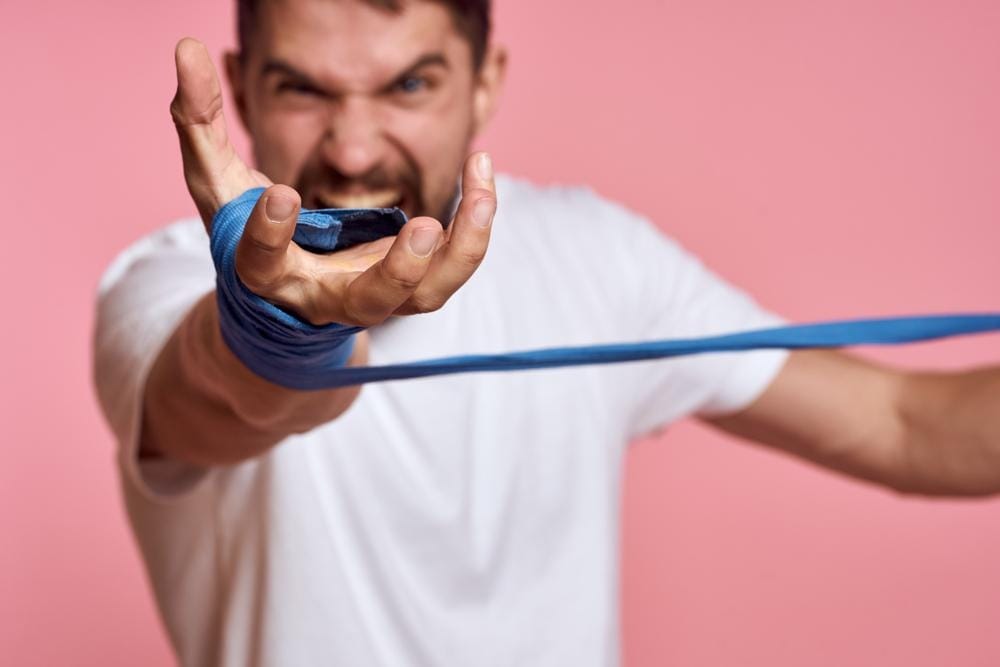
Within sixty seconds, his opponent throws an illegal elbow. The ref misses it. The crowd erupts. And in that single flash of indignation, twenty years of training quietly exits the building. He swings wild. Loses in the third round.
He didn't lose to a better fighter. He lost to his own nervous system.
Here's what nobody tells you after five, ten, or fifteen years in a professional career: your emotional state is not a side effect of your performance. It is your performance.
Every negotiation you've lost by being slightly too eager. Every conversation you've botched because someone triggered you and you responded before thinking. Every opportunity that slipped because anxiety made you hesitate at exactly the wrong moment.
Not skill failures. State failures.
If you want weekly insights that go this deep — without the fluff — you're in exactly the right place. Let's get into it.
THE WEATHER VS. THE THERMOSTAT
Most professionals treat emotions the way they treat Swiss weather in February: something that happens to them, not something they produce.

That framing is the first mistake — and it's a costly one.
Street-smart thinkers from Tony Robbins to Bruce Lee arrived at the same uncomfortable conclusion from different directions: emotions are not received. They are manufactured. You build them — every minute — through three inputs: what you focus on, the language you use with yourself, and how you use your body.
Robbins calls it the "emotional triad." Lee wrote: "I am the power that commands the feeling of my mind." Different words. Same instruction manual.
The implication? If you're "doing" anxiety — shallow breathing, collapsed posture, catastrophic mental images of everything that could go wrong before the board meeting — you can do something else instead.
Confidence is not a personality trait. It's a set of physical and cognitive actions: steady breath, upright spine, forward focus, decisive movement. You can run them on demand. Most people just never learned the sequence.
MOVE FIRST. THINK LATER.
Here's the thing most professionals get backwards when pressure hits: they try to think their way to calm.
That's like trying to steer a car by shouting at the dashboard.
When your mind is spiraling, your body is the fastest exit. Movement, posture, and breathing activate the vagus nerve — which triggers dopamine release and cuts cortisol almost immediately. A Stanford study measuring biological effects found that deliberate physical state-shifting produced a 139% improvement in participants' cortisol-to-testosterone ratio — a direct marker of reduced stress and readiness for sharp performance. Participants also showed a 300% increase in their ability to rewrite limiting patterns and a 159% boost in hormones tied to neuroplasticity.
The world hadn't changed for these people. Their physiology had. That changed everything else.

This is exactly why high-pressure professions ritualize physical preparation. Surgeons, pilots, special forces operators — they all run pre-performance sequences that shift the nervous system before the moment demands it. Harvard Business School research confirmed this isn't superstition: pre-performance rituals reduce anxiety and improve outcomes even when the person doesn't believe they'll work. The body doesn't care about your beliefs. It responds to what you do with it.
Blunt principle: When you can't think your way out of a feeling, move your way out.
EDIT THE INNER MOVIE
Physiology handles the body. Focus and meaning handle the mind. Both require deliberate management.

Consider two senior managers who lose the same deal. One focuses on the rejection: "They didn't want us. I'm not good enough. This always happens." The other focuses on the data: "Now I know what this market won't accept. That sharpens the next pitch."
Same event. Radically different emotional outcomes — and therefore radically different next moves.
Street-smart emotional control runs on two questions, asked in real time:
Where is my attention going? On everything that could collapse, or on the one thing I can actually move right now?
What meaning am I assigning this? Is this setback proof that I'm done — or evidence of where I get sharper?
This isn't forced positivity. It's state engineering. Deliberately choosing the interpretation that generates the most useful emotion for the next action.
I've watched brilliant people self-destruct in high-stakes situations — not because they lacked skill, but because they handed control of their internal narrative to the difficulty. The difficulty doesn't care. It's neutral. You're the one choosing what it means.
THE OBSERVER TRICK NEUROSCIENCE CONFIRMS
Here's where it gets genuinely interesting — and where most professionals leave serious performance on the table.

Across every tradition of high-performance thinking, one practice keeps surfacing: the ability to watch your own emotional reaction instead of being swallowed by it. "Don't react, respond." "Stay cool while others lose their heads." "Never let them see you emotionally hooked."
This is not about becoming numb. It's about holding two layers simultaneously — the emotional layer (this scares me, this angers me, this stings) and the observing layer (good, now what's the best move given this?).
A meta-analysis reviewed in Harvard Business Review found that leaders who practiced this kind of emotional detachment during crises achieved 23% better team outcomes and were rated as significantly more effective problem-solvers. The key detail: they detached from ego and fear — not from empathy.
And here's the neuroscience behind the simplest tool I know: name the emotion.
When you put feelings into words — "I notice I'm feeling humiliated" rather than simply being humiliated — your prefrontal cortex activates. Your amygdala, the brain's alarm system, quiets down. This process, called affect labeling, can reduce emotional intensity by up to 50% in high-intensity situations.
The label creates distance. Distance creates choice. Choice is what separates a reaction from a response.
In professional settings — negotiations, performance reviews, difficult clients, political office dynamics — this matters enormously. Visible emotional triggers become handles that others can pull at will. The person who can be reliably provoked into anger, shame, or guilt is the person who can be reliably controlled.
Emotional detachment removes those handles. Not by suppressing the feeling — by inserting a decision-making layer between stimulus and action.
IDENTITY: THE LEVER NOBODY TALKS ABOUT
Beneath physiology. Beneath focus and language. Beneath all of it, there is one deeper lever: the story you tell yourself about who you are.
If you see yourself as a victim, adversity produces despair. If you see yourself as someone who takes hits and keeps calculating, the same adversity triggers resolve. Robert Greene observed this about 50 Cent during the research for The 50th Law: behind the scenes, he was cool and calculating. His fearlessness wasn't theater — it was a trained default. Events mattered far less than the state he brought to them. And his state flowed from his identity.
This is why people who survive extreme challenges — a failed company, a health scare, a real crisis — often perform better afterwards, not worse. It's not the event. It's the identity script the event rewrote: "I am someone who acts in spite of fear." Once that's installed, your emotional system begins to align automatically.
You stop manufacturing courage from scratch each time. Your default becomes: I do what my kind of person does in this situation.
Write that sentence for yourself. Literally. Right now, if you want. "In tough situations, I am the one who..." Then take one small action today that confirms that story. Build the reference experiences. Your nervous system is programmable. Feed it the right data.
FIVE HABITS. START WITH ONE.
Pulling this together into something you can actually use:
1. Name the state instead of being it. "I notice I'm doing anxiety right now" carries more power than "I am anxious." The label creates the gap. The gap creates the choice.
2. Build micro-rituals for shifting quickly. A specific breathing pattern, a posture you associate with focus, two minutes of deliberate movement before a high-stakes meeting. Fire the ritual — don't wait to feel like it. Research confirms it works even when you're skeptical.
3. Rehearse the worst case. Visualize it realistically, then see yourself handling it. Unknown fear is the most paralyzing kind. When adversity arrives pre-rehearsed, it feels like a known scene — not an ambush.
4. Train the pause. Practice adding one deliberate beat before responding when triggered. In that beat: adjust posture, breathe, redirect focus. That pause is where reactive emotion ends and strategic response begins.
5. Build the identity sentence — then live into it. Small daily actions that confirm who you are in difficulty compound faster than any skill development. Skills need the right state to operate. State needs the right identity as its foundation.
THE REAL LESSON FROM THE BOXER
Here's what I want to leave you with.
The boxer in the opening story didn't lack talent. He had plenty. What he lacked was the one thing that turns talent into results under pressure: the ability to choose his state when everything around him was trying to choose it for him.

That ability is not a gift. It is not a personality type. It is not reserved for people who grew up in the right family or had the right therapist.
It is a practice. A series of decisions, made repeatedly, until the nervous system learns a new default.
And for anyone serious about performing at the level their experience and ambition actually deserve — it is the practice that makes every other skill worth having.
Your state is the multiplier. Everything else is the number being multiplied.
YOUR NEXT MOVE (Actionable takeaways)
This week: Pick one micro-ritual and run it every morning for seven days before your first real professional interaction. Track what shifts.
This month: Write your identity sentence and stick it where you'll see it before tough moments.
Right now: Next time you feel an emotional reaction rising, say the words out loud (or in your head): "I notice I'm feeling..." — and pause for two breaths before responding.
COMMUNITY QUESTION
I'm genuinely curious: what's the situation in your professional life right now where your emotional state is costing you the most? A difficult relationship at work, a fear that's keeping you from the next move, a pattern you keep noticing in yourself under pressure?
Drop it in the comments. This community thinks better together than alone — and your answer might be the reflection someone else needs today.
Subscribe and don't miss next week's breakdown of why your biggest professional risks are probably the wrong ones.

